The Life of Animals | Kleinmann's tortoise | Kleinmann's Tortoise is the smallest tortoise in the northern hemisphere Female tortoises are larger than the males males are more Slender and have a longer tail. Their shells have high domes, and range in color from ivory to pale gold to dark brown or dull yellow. This allows the paler tortoise to stay in the desert heat for longer. The tortoise's scutes have dark sidings That fade with age. The head and Limbs are a very pale ivory-yellow to Yellowish-brown color.
Showing posts with label Tortoise. Show all posts
Kleinmann's tortoise
The Life of Animals | Kleinmann's tortoise | Kleinmann's Tortoise is the smallest tortoise in the northern hemisphere Female tortoises are larger than the males males are more Slender and have a longer tail. Their shells have high domes, and range in color from ivory to pale gold to dark brown or dull yellow. This allows the paler tortoise to stay in the desert heat for longer. The tortoise's scutes have dark sidings That fade with age. The head and Limbs are a very pale ivory-yellow to Yellowish-brown color.
Indian star tortoise
The Life of Animals | Indian star tortoise | Carapace very convex, dorsal shields Often forming humps Nearly vertical lateral margins posterior margin somewhat expanded and strongly serrated; no nuchal supracaudal undivided, incurved in the male shields strongly striated concentrically first vertebral longer than broad, the others broader than long third at least as broad as the corresponding costal. Head moderate forehead swollen, convex, and covered with rather small and irregular shields; beak feebly hooked, bi-or tricuspid; edge of jaws denticulated alveolar ridge of upper jaw strong.
Desert tortoise
The Life of Animals | Desert tortoise | This tortoise may attain a length of 10 to 14 inches (25 to 36 cm), with males being slightly larger than females. Male tortoises have a longer gular horn than females, Their Plastron (lower shell) is concave compared to female tortoises. Desert tortoises can grow from 4-6 "(10-15 cm) in height and weigh 8-15 lb (4-7 kg) fully grown. The tortoise is Able to live where ground temperature may exceed 140 degrees Fahrenheit (60 degrees Celsius) Because of its ability to dig underground Burrows and escape the heat.
Aldabra giant tortoise
The Life of Animals | Aldabra giant tortoise | Adwaita's was determined by carbon dating his shell, making his age to be around 255 in 2006 Today, Esmeralda is thought to be the oldest giant tortoise living at 170 years old, since the death of Harriet at 176, a giant Galapagos tortoise. Esmeralda is an Aldabra giant tortoise. Females can Produce multiple clutches of eggs in a year. In captivity, oviposition dates Vary. Tulsa Zoo maintains a small herd of Aldabra tortoises and They have reproduced Several times since 1999. The zoo also incubates Their eggs artificially, keeping two separate incubators at 81 degrees F and 86 degrees F.
Galapagos Tortoise
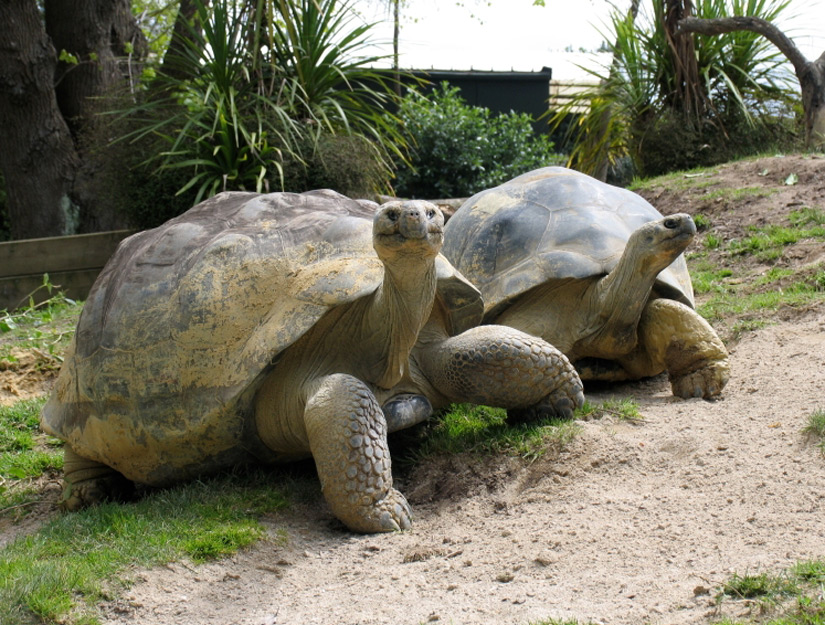
The Life of Animals | Galapagos Tortoise | The Galapagos tortoises, like most other species of tortoise, is a herbivores spending its time grazing on grass and low trees. The Galapagos tortoise is a very quiet, peaceful and lazy animal with the Galapagos tortoises waking up early in the morning to Basque in the sun until the enormous body of the Galapagos tortoise has warmed up.
Post Labels
Albatross
Alligator
Amphibian
Anteater
Antelope
Ape
Armadillo
Aves
Avocet
Axolotl
Baboon
Badger
Bandicoot
Barb
Bat
Bear
Beaver
Bee
Beetle
Beetle Horns
Binturong
Bird
Birds Of Paradise
Bison
Boar
Bongo
Bonobo
Booby
Budgerigar
Buffalo
Bugs
Bull
Butterfly
Butterfly Fish
Caiman
Camel
Capybara
Caracal
Cassowary
Cat
Caterpillar
Catfish
Cattle
Centipede
Chameleon
Chamois
Cheetah
Chicken
Chimpanzee
Chinchilla
Cicada
Cichlid
Civet
Clouded Leopard
Clown Fish
Coati
Collared Peccary
Common Buzzard
Cougar
Cow
Coyote
Crab
Crane
Critically Endangered
Crustacean
Cuscus
Damselfly
Deer
Dhole
Discus
Dodo
Dog
Dolphin
Donkey
Dormouse
Dragon
Dragonfly
Duck
Dugongs
Eagle
Eastern Rosella
Echidna
Eel
Elephant
Emu
Extinct
Falcon
Fennec fox
Ferret
Fish
Flamingo
Flatfish
Flounder
Fly
Fossa
Fox
Frog
Gar
Gazelle
Gecko
Gerbil
Gerridae
Gharial
Gibbon
Giraffe
Goat
Goose
Gopher
Gorilla
Grasshopper
Green Anaconda
Guinea Fowl
Guinea Pig
Gull
Guppy
Hamster
Hare
Harp seal
Hawk
Hedgehog
Heron
Hippopotamus
Horse
Hummingbird
Hyena
Ibis
Iguana
Impala
Insect
Invertebrate
Jackal
Jaguar
Jellyfish
Jerboa
Kangaroo
Kestrel
Kingfisher
Kiwi
Koala
Komodo
Kowari
Kudu
Ladybird
Ladybug
Larvae
Lemming
Lemur
Leopard
Liger
Lion
Lizard
Llama
Lobster
Loris
Lynx
Macaque
Magpie
Mammoth
Manta Ray
Markhor
Marsupial
Mayfly
Meerkat
Mermaid
Millipede
Mollusca
Mongoose
Monkey
Moorhen
Moose
Mosquito
Moth
Mule
Near Threatened
Newt
Nightingale
Nudibranch
Numbat
Octopus
Okapi
Omnivore
Orangutan
Oriole
Ornamental Birds
Ornamental Fish
Ostrich
Otter
Oyster
Pademelon
Panda
Panthera
Parrot
Peacock
Pelican
Penguins
Phanter
Pig
Pika
Pike
Platypus
Polar Bears
Porcupine
Possum
Prawn
Primate
Puffer Fish
Puffin
Puma
Quoll
Rabbit
Raccoon
Rare
Rat
Reindeer
Reptile
Rhino
Robin
Rodent
Salamander
Salmon
Scorpion
Scorpion Fish
Sea lion
Sea horse
Seals
Serval
Shark
Skunk
Snake
Squid
Squirrel
Starling Bird
Stoat
Stork
Swan
Tapir
Tarantula
Threatened
Tiger
Tortoise
Toucan
Turtle
Vulnerable
Vulture
Walrus
Warthog
Weasel
Wildebeest
Wolf
Wolverine
Wombat
Woodlouse
Woodpecker
Zebra
crocodile
east Concern
moles
ntelope
owl
spider
whale